
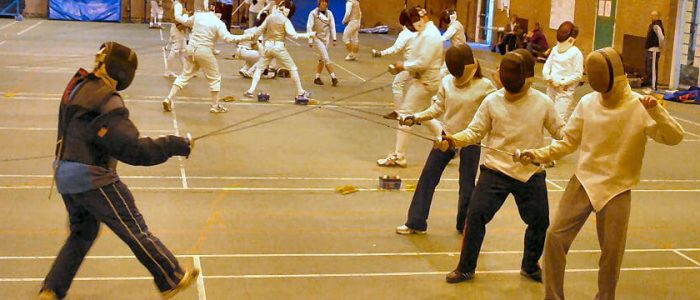
 All equipment provided
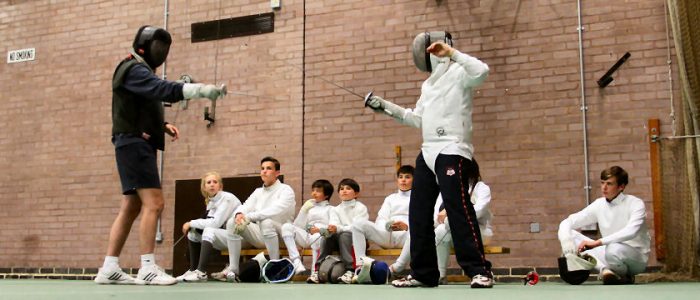
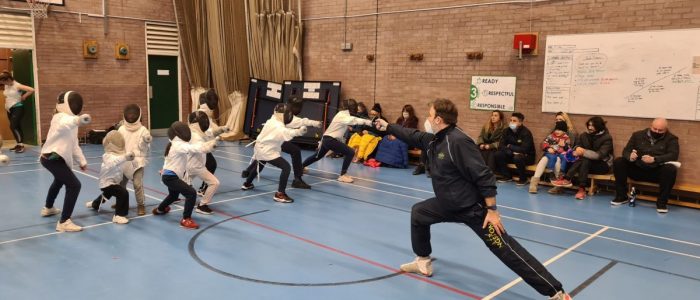
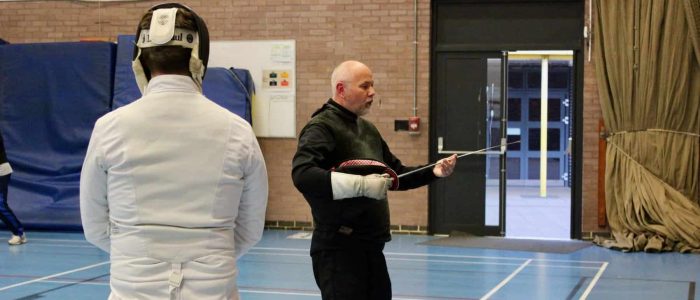
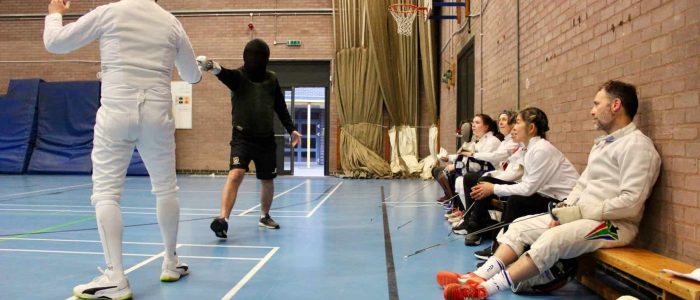
Fencing Courses Available
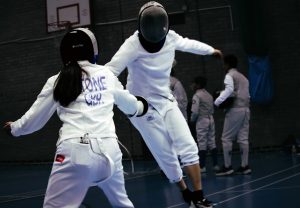
Space on the course is strictly limited, so please apply soon to avoid disappointment.
Mailing List
What equipment is needed for a fencing course?
All fencing equipment including foils, jackets, plastrons, gloves, and masks are provided by Kingston Fencing Club. Participants should wear stretchy trousers (e.g., tracksuit), a T-shirt, and trainers. No shorts.It is advisable to bring your own bottled drinking water.
What time should I arrive for a course?
Please arrive 10-15 minutes earlier for registration and equipment preparation.
What age groups can take fencing courses?
Junior courses are for ages 10-16. Adult courses accommodate ages 14+ or 16+ depending on the specific course. All courses are mixed-gender.
Where do fencing courses take place?
All fencing courses take place at Sports Hall, Coombe Boys School, College Gardens, New Malden, Surrey, KT3 6NU. See Meeting Place for directions and parking.
I can't attend one of the sessions on the course due to a prior commitment. What should I do?
Book and attend the course and then inform the coach on the first session. They will be able to help you catchup on what you’ve missed.
Can I join a course that's just started?
If a course recently started, contact the club about potential late enrollment. If its only a week or two in we can norammly accomodate you.
What happens after completing a beginner course?
All people who take the course can move on to become members of the club if they wish to continue fencing. Training and coaching continue with our qualified coaches on a weekly basis in either group or individual lessons. Equipment is available to use during club evenings including electric equipment. To find out more see Membership.
Do I need insurance for a course?
New fencers qualify for a free 90-day Introduction Membership, which they must register individually using this link: BF Introductory Membership before or at the first session.
Is fencing safe?
Yes, fencing is one of the safest sports. All participants wear full protective equipment including masks, jackets, gloves, chest protectors and plastrons. The sport has strict safety rules and is supervised by qualified coaches. All equipment is sanitized before use. A study in for the 2008 Olympic Games showed only 5 sports has fewer injuries than Fencing. (Study). The most common injury in fencing is a twisted ankle and foootwork training is provided to minimise the risk.
Is fencing safe for children?
Yes, fencing is very safe for children. Junior fencers wear the same full protective equipment as adults, and sessions are supervised by qualified coaches with safeguarding training. The sport teaches discipline and control, making it safer than many contact sports like rugby or football.
Does it hurt when you are hit?
In a typical fencing bout getting hit does not hurt. Beginners are trained to use the equipment safely and normal usage does not hurt. Sometimes its possible that a hit may be harder than usual by accident which may leave a small bruise. Often you don’t notice you have been hit especially when using the electric scoring equipment. All female participants must wear chest protection but all participants have the option to wear chest protectors too which gives additional protection from harder hits.
What safety equipment is provided?
Kingston Fencing Club provides all safety equipment including protective masks with safety-certified mesh, fencing jackets, plastrons, chest protectors, and gloves. All equipment meets British Fencing safety standards.
What are your child safeguarding precautions?
All coaches are regularly DBS checked by the club and must follow the club’s Polices for Safeguarding and Health and Safety. All coaches are certified by the sports governing body British Fencing and can be found on the British Fencing Coach Register. The club had an apointed Welfare Officer who ensures best practice is followed in this area.